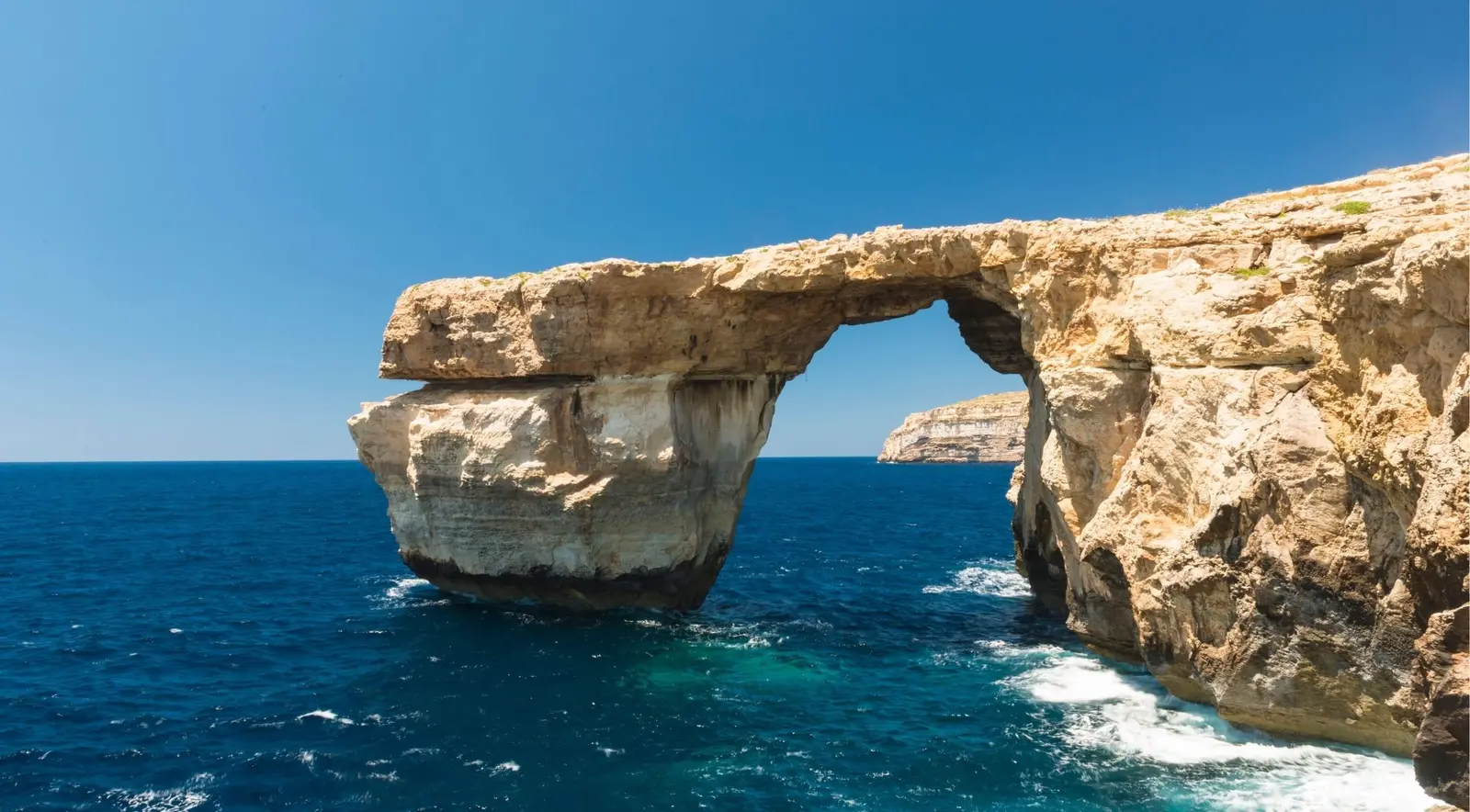
Is the Blue Lagoon worth it in winter?
Yes, if you go for the scenery. Comino can be visited all year, and some boat trips keep sailing through winter on fewer days and with fewer operators. The lagoon is quiet, the cliffs and caves are at their most dramatic, and the car-free island is good walking country. Swimming is the part that goes: the sea is about 16°C in January and February.
The winter trips that work best are the ones that do not depend on a swim. A Gozo and Comino day gives you the lagoon, the caves and several hours on Gozo; a short private boat gives you Comino without a long day at sea; and the public ferry lets walkers spend as long on the island as they like, for a quiet Comino in winter. On any winter day, wind and sea conditions matter more than the rain, so book with free cancellation.
- Best winter format
- Gozo and Comino, or a short private Comino boat
- For walkers and photographers
- The ferry to Comino and a day on foot
- Best warm-season format
- Blue Lagoon, Crystal Lagoon and the caves
- Best months for swimming
- June to October, with September and early October particularly strong
- Quieter months at the lagoon
- November to March
- Most important check on the day
- Wind, waves and sea conditions
- Sea temperature, January and February 16.4°C and 15.6°C
- Average daily high, December to February 16–17°C
- Sunset, 15 December 16:50
Check winter dates for Gozo & Comino Free cancellation up to 24 hours before · the calendar shows which departures are still open
What changes through the season?
The Blue Lagoon is not the same trip all year. In the warm season, swimming and snorkelling can justify a long stop at the lagoon, and the cruises are built around them. In winter the better trips are shorter, more flexible, or combined with Gozo, so the day still works without a swim.
The water is what changes most. Malta's sea falls from about 22°C in November to about 18 to 19°C in December and 16°C in January and February, while the air settles at an average daily high of 16 to 17°C. The seasonal swim stops close: the Crystal Lagoon swim becomes a photo stop, and stops at bays such as St Nicholas are published for May to October only. Fewer operators sail, the days are short, and winter is the windiest part of the year, with the average peak gust at Luqa at about 80 km/h in each of the three months.
The place itself stays the same. The lagoon still sits over white sand between Comino and Cominotto, the Santa Maria caves and the cliffs are still there, and the Comino ferries publish one daily timetable with no season, so you can reach the island in any month when the sea allows.
A winter day at the Blue Lagoon
The first thing most winter visitors notice is the quiet. In summer the lagoon is capped at 4,000 people at any one time and still feels busy; in winter it is a much calmer place. December, January and February had the fewest tourist nights of any months in Malta in 2025, about 1.1 to 1.4 million each against 3.5 million in August. Those are figures for the whole country, but the difference is obvious when you arrive.
The water keeps its colour over the pale sand, although it is at its brightest in strong sun, and winter has more grey days: December and January average 13 rain days each. On a clear, calm winter morning the lagoon can look as it does in the photographs. On a grey, breezy one it is a moody, beautiful stretch of coast, and a good day for the caves and the cliffs more than for the colour.
A winter boat day is cooler than it looks from the shore. The open deck on the way back is the coldest part, and a full-day cruise returns around or after sunset, which is at about 16:50 in mid-December and 17:44 in mid-February.
Who winter suits, and who should wait
Winter suits you if you…
- Want to see the lagoon without the summer crowds
- Like walking, photography and wild coastline
- Are happy with a scenic cruise and a day on Gozo
- Can keep a spare day in case the boat does not sail
Wait for spring or summer if you…
- Want a long swim or snorkel at the lagoon
- Have one fixed day and no room to move it
- Get seasick in choppy water
- Want a beach day with sunbeds and food on the shore
If swimming is the point of the trip, our best time to visit Malta guide compares the warm-water months, and the sea is comfortable for most people from June to October.
What kind of tour makes sense in winter?
Match the tour to the season. A product that is ideal in August can be a poor choice in January, and a winter itinerary should not be judged by how many swimming stops it advertises.
Standard shared cruise
Best when swimming is the main point of the day and the full schedules are operating, which in winter they are not. A 3–4 hour Comino cruise is usually more versatile than a long single-stop excursion. Two Comino-only trips were bookable on almost every winter date when we checked: a longer catamaran day, the Comino Blue Lagoon, Crystal Lagoon and sea caves tour from Buġibba, and the smaller 3–4 hour Comino boat tour from Ċirkewwa. In winter, though, a long stop at the lagoon is a long time at anchor in the cold.
Gozo and Comino
This is at its best in late autumn and winter, because Gozo adds a substantial sightseeing part to the day. If nobody wants to swim, the day still includes Victoria, the island scenery and a proper excursion, not a long cold stop at anchor. The Gozo and Comino full-day cruise is the one we would book in winter.
Private boat
Best for couples, families and small groups who want a flexible route, the caves, a shorter crossing and control over the stops. In summer a private boat helps you avoid the crowds; in winter it helps with flexibility and a compact day, and the skipper can adjust the route to the conditions. The Comino and Blue Lagoon private speedboat tour runs for two or three hours.
Three ways to see it in winter
The three below are different enough to choose between: a Gozo and Comino day, a Comino-only catamaran and a short private boat. Our guide to Blue Lagoon boat tours in winter covers every format that runs, and which operators pause.
Our winter picks
Malta: Gozo & Comino Islands, Blue Lagoon & Sea Caves Tour
The lagoon, a photo stop at the Crystal Lagoon, the Santa Maria caves and three to four hours on Gozo, with an optional bus to Victoria and the Citadel. In winter the operator may use a large sailing catamaran, and the bar on board takes cards.
Check winter datesComino: Blue Lagoon, Crystal Lagoon & Seacaves Tour
The Blue Lagoon, the Crystal Lagoon and the Santa Maria caves without the Gozo hours, with time to walk ashore on Comino. Outside June to October the Crystal Lagoon swim becomes a scenic photo stop, and there is a kitchen and bar on board.
See Comino cruise datesMalta: Comino & Blue Lagoon Private Speed Boat Tour
Comino's lagoons and caves in two or three hours, from Mġarr on Gozo or Ċirkewwa, with your own skipper and a shaded area. Fuel is paid on top of the price, and a fast boat in a winter chop is not for anyone prone to seasickness.
See speedboat datesWalking Comino in winter
The Malta Tourism Authority describes Comino as worth a visit in winter for walkers and photographers, and it is easy to see why. The island is about 3.5 km² and car-free and almost uninhabited, with rocky paths across wild thyme and garigue, and views from the cliffs over the lagoon, Gozo and Malta. From the lagoon it is a short walk up to St Mary's Tower, the 17th-century watchtower on the hill above.
For a walking day, the public ferry is the simplest way over. The Comino ferries from Ċirkewwa on Malta and Marfa run on one daily timetable, which lets you choose your own time on the island. Our Comino ferry guide covers the crossing, and our Comino island guide covers the island. Take water and something to eat, because Comino has no town or shops and the lagoon's kiosks are a summer business you should not count on in winter, and wear shoes with grip: the paths are uneven and the rock is slippery when wet.
Weather, wind and cancellations
Every Blue Lagoon trip is a trip at sea. Operators may change the route, skip the Crystal Lagoon, avoid the caves, shorten the stops, switch boats, postpone or cancel when conditions require it, and the Comino ferry also suspends crossings in bad weather. Book the trip early in your Malta stay so you still have another day available.
In autumn and winter, flexible cancellation is particularly valuable. Do not rely only on the weather in Valletta or at your hotel: conditions around Comino can be different, and the Met Office says winds over the open sea run stronger than at the airfield where its figures are measured. Wind, waves and the state of the sea matter more than a simple rain icon, since a passing shower does not stop a boat and a strong wind can. The Met Office's mariners' forecast gives the wind and sea for the coming days.
Blue Lagoon landing pass
If you plan to step ashore in the managed Blue Lagoon area, check the current access rules and get the free landing pass when it applies, from the official site at blcomino.com. The pass has been required to set foot on land at the lagoon since 1 May 2025 and was brought back for summer 2026, but no official source says whether it applies in winter, so check the site for your date.
The landing pass and your boat or ferry booking are separate, and your tour does not book it for you. The rest of Comino needs no pass. Our Blue Lagoon visitor guide covers the landing in more detail.
What to bring
In the warm season the list is swimwear, a towel, high-SPF sunscreen, a hat, sunglasses and plenty of water. For a winter trip, dress for a cool, windy day on the water: a fleece or jumper, long trousers and a windproof layer, ideally a waterproof one given the 11 to 13 rain days a month. Add shoes with grip if you plan to walk, and water and snacks for Comino.
If you intend to swim, bring swimwear, a towel and a complete dry change of clothes, and get changed straight after. Sunglasses and sunscreen are still useful: the winter sun is low but bright off the water.
Winter in figures
December is the mildest of the three winter months for the sea; January and February have the coolest sea of the three and among the fewest tourist nights of the year.
| Month | Sea | Air high | Rain | Rain days | Peak gust, Luqa | Sunset, 15th | Tourist nights, 2025 |
|---|---|---|---|---|---|---|---|
| December | 18.5°C | 17.1°C | 85 mm | 13 | 80 km/h | 16:50 | 1.38 million |
| January | 16.4°C | 15.7°C | 79 mm | 13 | 80 km/h | 17:12 | 1.13 million |
| February | 15.6°C | 15.7°C | 69 mm | 11 | 81 km/h | 17:44 | 1.24 million |
The peak gust is the average of each month's strongest gust, measured on land at Luqa airfield, so it shows the seasonal pattern and is not a cancellation rate. Nobody publishes how many winter sailings are cancelled. Our month-by-month guide has the full year.
Final verdict
A winter visit to the Blue Lagoon is about scenery, caves, walking and a quiet Comino, not a guaranteed beach day, and on those terms it is worth it. Book a Gozo and Comino day or a short private boat, or take the ferry and walk, keep a spare day in case of wind, and dress for the sea breeze. If you want to swim, come back between June and October. Travelling in late autumn instead? Our guide to the Blue Lagoon in November covers the change of season.
How we know
Sea temperature is the Malta Met Office's monthly mean series published by the National Statistics Office (Environment Selected Indicators, Table 16), averaged here over 1996–2025. Air temperature, rain and the peak gust are the Met Office's 1991–2020 climate profile for Luqa airfield, published by the NSO in The State of the Climate 2022. Tourist nights are the NSO's Inbound Tourism releases for 2025. The winter and swim-season guidance is the Malta Tourism Authority's. Operator seasons are those published by Hornblower, Supreme Travel and the Comino Ferries Co-op, and the GetYourGuide booking calendars read in September 2026; a calendar that shows a date as bookable is availability, not a promise that the boat sails in any weather. The landing-pass rules are from blcomino.com and the MTA. Sunset is computed for the lagoon's coordinates.
The Blue Lagoon in winter: common questions
Is the Blue Lagoon worth visiting in winter?
Yes, if you go for the scenery and not for a beach day. In winter the lagoon is quiet, the cliffs and caves of Comino are at their most dramatic, and the car-free island is good walking country. The sea is about 16°C in January and February, so most people will not swim, and some winter days are too windy for the boats to sail. A Gozo and Comino day, a short private boat or the ferry for a walk make the most of it.
Can you swim at the Blue Lagoon in winter?
You can, but few people do. On the Malta Met Office's long-term series the sea is about 18 to 19°C in December and about 16°C in January and February, the air averages a high of about 16 to 17°C, and the Malta Tourism Authority does not recommend swimming from November to February. Winter trips are better judged as sightseeing trips than swimming trips.
Do Blue Lagoon boat trips run in winter?
Some do, on fewer days and with fewer operators. The full-day Gozo, Comino and Blue Lagoon cruise was bookable on every winter date when we checked, Supreme Travel runs on certain days from December to February, Hornblower closes in January and February, and the Comino ferries publish one daily timetable with no season. Every trip depends on the wind and sea on the day. Our guide to Blue Lagoon boat tours in winter lists what runs.
Is the Blue Lagoon crowded in winter?
No. December, January and February are among the quietest months for visitors to Malta, with about 1.1 to 1.4 million tourist nights a month in 2025 against 3.5 million in August. That is a figure for the whole of Malta, not a count at the lagoon, but the winter lagoon is a very different place from the crowded summer one.
What should I wear for the Blue Lagoon in winter?
Dress for a cool, windy day at sea: a fleece or jumper, long trousers, a windproof and ideally waterproof layer, and shoes with grip if you plan to walk on Comino's rocky paths. Bring water and snacks, and a complete dry change of clothes and a towel if you intend to swim.
Do you need the Blue Lagoon landing pass in winter?
Check blcomino.com for your date. The free landing pass has been required to step ashore at the Blue Lagoon since 1 May 2025 and was brought back for summer 2026, but no official source says whether it applies in winter. The pass and your boat or ferry booking are separate.